Orlando "The youngest son of Sir Rowland de Bois and younger brother of Oliver. Orlando is a handsome young man who, under his brother’s neglectful care, has languished without a gentleman’s education or training. Regardless, he considers himself to have great potential, and his victorious battle with Charles proves him right. Orlando cares for the aging Adam in the Forest of Arden and later risks his life to save Oliver from a hungry lioness, proving himself a proper gentleman and fitting mate for Rosalind."
I feel Orlando is a simple creature who's intertwined turmoil's of hereditary neglected childhood and love build a character many feel daunted to play. I believe whilst reading the script one can not look through a prism of time instead with sentiment. By this I mean it is easy to view Orlando with a contemporary view and see him as a lustful and subsuming homosexual. Whereas I don't believe an Elizabethan audience would have taken Orlando like this, instead they would see a simple animalistic creature who seems to only have "one goal at a time" mindset.
During the rehearsal period we decided to undertake an exercise in which we would simlpy say our lines, without any meaning or context but just move when we felt a change in thought. This enabled the actor playing the role to have a physical
Orlando is niave to love and the forms in which one must convey to be an eligable man. Shakespeare dismisses the romantics of the time and then
RosalindThe heroine of the play. Rosalind is the daughter of the exiled Duke Senior and the constant companion of her cousin Celia. She is independent-minded, strong-willed, good-hearted, and terribly clever. Rather than slink off into defeated exile, Rosalind resourcefully uses her trip to the Forest of Arden as an opportunity to take control of her own destiny. When she disguises herself as Ganymede, a handsome young man, and offers herself as a tutor in the ways of love to her beloved Orlando, Rosalind’s talents and charms are on full display. Rosalind teaches those around her to think, feel, and love better than they have previously, and ensures that the courtiers returning from Arden are gentler than when they fled to it.
Thursday, 23 January 2014

Thursday, 16 January 2014
Shakespeare language
Language within "As You Like It".
William Shakespeare, within his play, 'As You Like It' uses many devices which at first may daunt an actor but with a basic understanding of the features used it will enable a reader to comprehend the text. The monologues for the most famous speeches may seem a challenge but Shakespeare helps the actor by the structure in which he writes them. most of the famous monologues are written in Iambic Pentemeter. By using a syntax with a rythm of ten beats allows the actor to put the stress oin certain words in the sentence which allows the meaning of the sentence to come across and not be misinterpreted.
Here we see the use of the unstressed stressed formation within the iambic pentemeter
de/DUM de/DUM de/DUM de/DUM de/DUM.
Shakespeare here with the use of iambic pentemeter and the stressing pattern allows the Actor to stress the words in bold. "All, Men Women, Merely and Players" are all the important words in the sentence. This doesnt mean you stress all the words as this can sound robotic, but by stressing these words, it makes the passage not sound like a question but instead a statement. Jacques is sure of what he is saying here.
"And all the men and women merely players."
Perhaps an actor may be wondering where their creative input comes in. Shakespeare aids the actor with this further, all one has to do is look. Shakespeare's use of sibilance and aliteration in the following passage helps the actor.
" Turning again toward childish treble, pipes
And Whistles in his sounds; last scene of all."
Here we can see the use of aliteration and sibilance within this utterance. When said aloud the actor if using a correct pronunciation of the [s] then would sound like an old man. Shakespeare with the language creates sounds that connotate with an old man. The actor does not even need to be creative instead just have an appreciation of the language Shakespeare implements within the monolgue and they will look authentic on stage.
Shakespeare language can dazzle a mere 21st century reader but the topics in which Shakespeare is writing about are still relevant within todays society, which what makes Shakespeare so successful. His metaphors are beautifully poignant and will resonate with readers not just of british orgin but all across the world.
William Shakespeare, within his play, 'As You Like It' uses many devices which at first may daunt an actor but with a basic understanding of the features used it will enable a reader to comprehend the text. The monologues for the most famous speeches may seem a challenge but Shakespeare helps the actor by the structure in which he writes them. most of the famous monologues are written in Iambic Pentemeter. By using a syntax with a rythm of ten beats allows the actor to put the stress oin certain words in the sentence which allows the meaning of the sentence to come across and not be misinterpreted.
Here we see the use of the unstressed stressed formation within the iambic pentemeter
de/DUM de/DUM de/DUM de/DUM de/DUM.
Shakespeare here with the use of iambic pentemeter and the stressing pattern allows the Actor to stress the words in bold. "All, Men Women, Merely and Players" are all the important words in the sentence. This doesnt mean you stress all the words as this can sound robotic, but by stressing these words, it makes the passage not sound like a question but instead a statement. Jacques is sure of what he is saying here.
"And all the men and women merely players."
Perhaps an actor may be wondering where their creative input comes in. Shakespeare aids the actor with this further, all one has to do is look. Shakespeare's use of sibilance and aliteration in the following passage helps the actor.
" Turning again toward childish treble, pipes
And Whistles in his sounds; last scene of all."
Here we can see the use of aliteration and sibilance within this utterance. When said aloud the actor if using a correct pronunciation of the [s] then would sound like an old man. Shakespeare with the language creates sounds that connotate with an old man. The actor does not even need to be creative instead just have an appreciation of the language Shakespeare implements within the monolgue and they will look authentic on stage.
Shakespeare language can dazzle a mere 21st century reader but the topics in which Shakespeare is writing about are still relevant within todays society, which what makes Shakespeare so successful. His metaphors are beautifully poignant and will resonate with readers not just of british orgin but all across the world.
Tuesday, 26 November 2013
shakespeare research project
"As You Like It" is a parody comedy written by William Shakespeare and first published in 1623. The narrative follows the protagonist Rosalind, who is the niece of the Duke who in short banishes her and her cousin, Celia, (Daughter of the Duke) to the forest where she has to thus dress as a man, named, Gillymead. Shakespeare throughout this comedy comments on life for a Elizabethan citizen and parodies peoples ideologies socially and politically.
How The Play was staged.
The play originally would have been staged at the Globe Theatre in London. The globe was called this not because of its spherical shape (even though it is not circular) but instead because it was the place where people would come to hear the stories of the world. This is what makes Shakespeare great as his stories resonate around the whole world and are poignant because they simply talk about the human condition.
With an end on stage the lowly paid audience members would have stood in front of the stage where as the gentry of the time would have been seated around the outside of the theatre. Due to acting being seen upon as such a lowly profession as prostitution the actors and companies were not paid alot so the grandiour of the theatre would be all the players could work with. They may have been able to bring on a heath to represent the forest but in turn the imagination of the players and audience members would have been key.
During our adaptation of the play, the scene will be in an actual forest where a war has broken out and the Orlando and Rosalind are two characters caught up in this. Shakespeare's writing is timeless and this is what is so fascinating about "As you like it." We are setting our scene in a world war 3 situation yet the common theme is love which still holds truth to this day.
Political elements of "As You Like It."
Many think the name, The Globe, reflects the spherical shape of the theatre, but in fact the Theatre has many sides and the name actually reflects the concept that the plays William Shakespeare told from here were from all around the globe; a different world to that of Elizabethan London. For an actor at The Globe it would have been a daunting experience. Many of the audience went to be seen and after some had been standing for around 3-4 hours after some of Shakespeare lomger works, would have become restless. Fights were famously familiar and courting would take preference over performance which would entail the audience watching other audience members rather than the actors themselves. The Globe did try to combat this, with the most audacious shows and most importantly the thrust stage. The stage comes out into the audience, this allows the actors to get closer to the audience and perhaps more importantly the audience closer to the actors which would then allow them to follow the themes of the play.
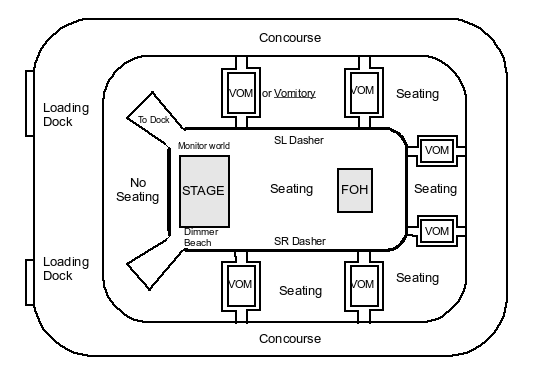
One theory behind Shakespeare's iambic pentameter was that the DeDumDeDum structure allowed an audience member to drift in and out of the play as the rhythm was constant without, and if Shakespeare wanted a message to come across he would often break this rhythm.
Following our class today please consider the following when completing this work: Discuss in detail the original staging make sure you go through the design of The Globe Stage, include a diagram for reference, then make direct links to how As You Like It would have been performed and how the elements of the staging would have been used in the original production, be specific. You could discuss the experience of theatre for both the Elizabethan actor and audience. You should also analyse the themes of the play thoroughly, refer to the assignment brief and your notes and make sure you are explaining what relevance the themes/characters had for the audience then and how they are relevant now for a contemporary audience. Use quotes, images and video clips to illustrate and support statements you make.

Subscribe to:
Posts (Atom)